Launch offer — valid today only

📄 Digital book in PDF · read it on your phone or print it

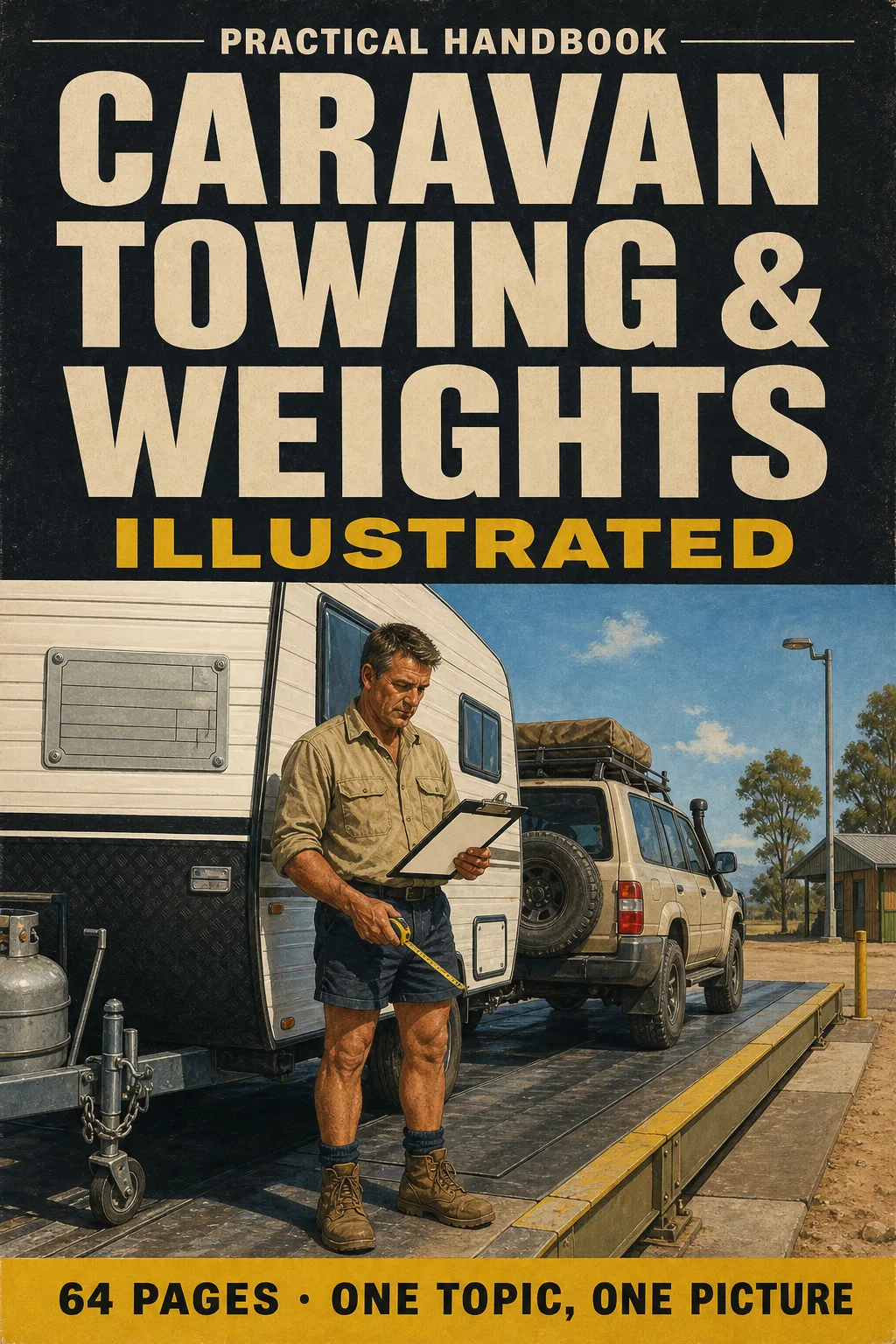
Caravan Towing & Weights in Drawings: Know Which Limit You Hit First One Topic on Every Page

For Australian rigs, in kilograms: Tare, ATM, GTM, tow ball mass, GVM, GCM, weighbridge day, loading the van and hitch-up. Every topic has its own page: the drawing first, then what you need to remember. 64 illustrated pages.

SEE HOW THE BOOK WORKS

🔒 Secure checkout · PDF by email · 30-day guarantee

Every topic, its own pageEach weight rating drawn, with the explanation beside it
64 illustrated pages8 parts, from the compliance plate to the hitch-up routine
Up-to-date sourcesAustralian Design Rules, VSB 1 and state road authority guidance
PDF by emailFormat

Look Inside the Book

Every page has one big drawing and a box with the numbers and steps you need to know:

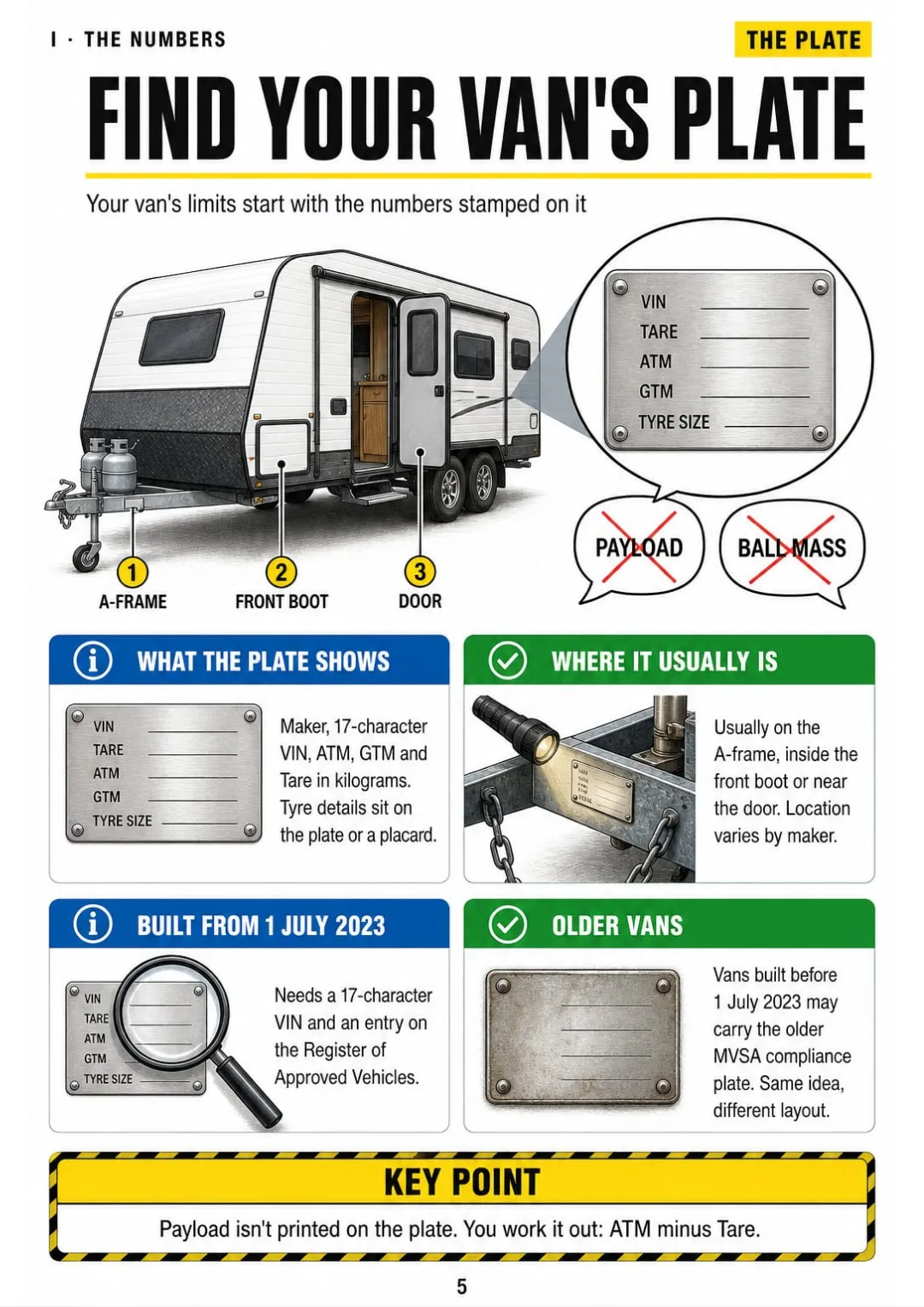
The plate shows Tare, ATM and GTM; payload you calculate yourself.
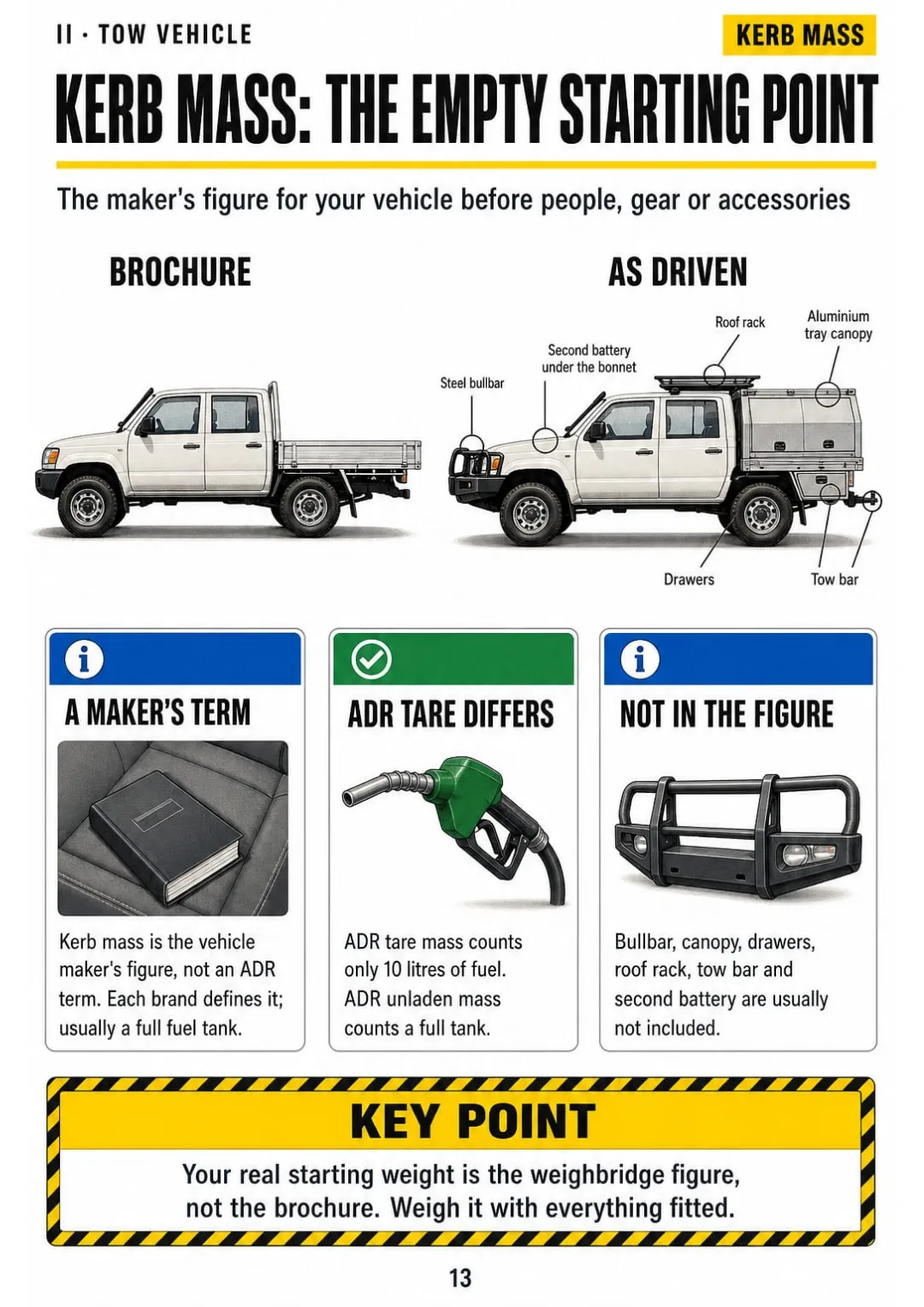
Kerb mass is the maker's figure: accessories like bullbars and canopies usually aren't included.
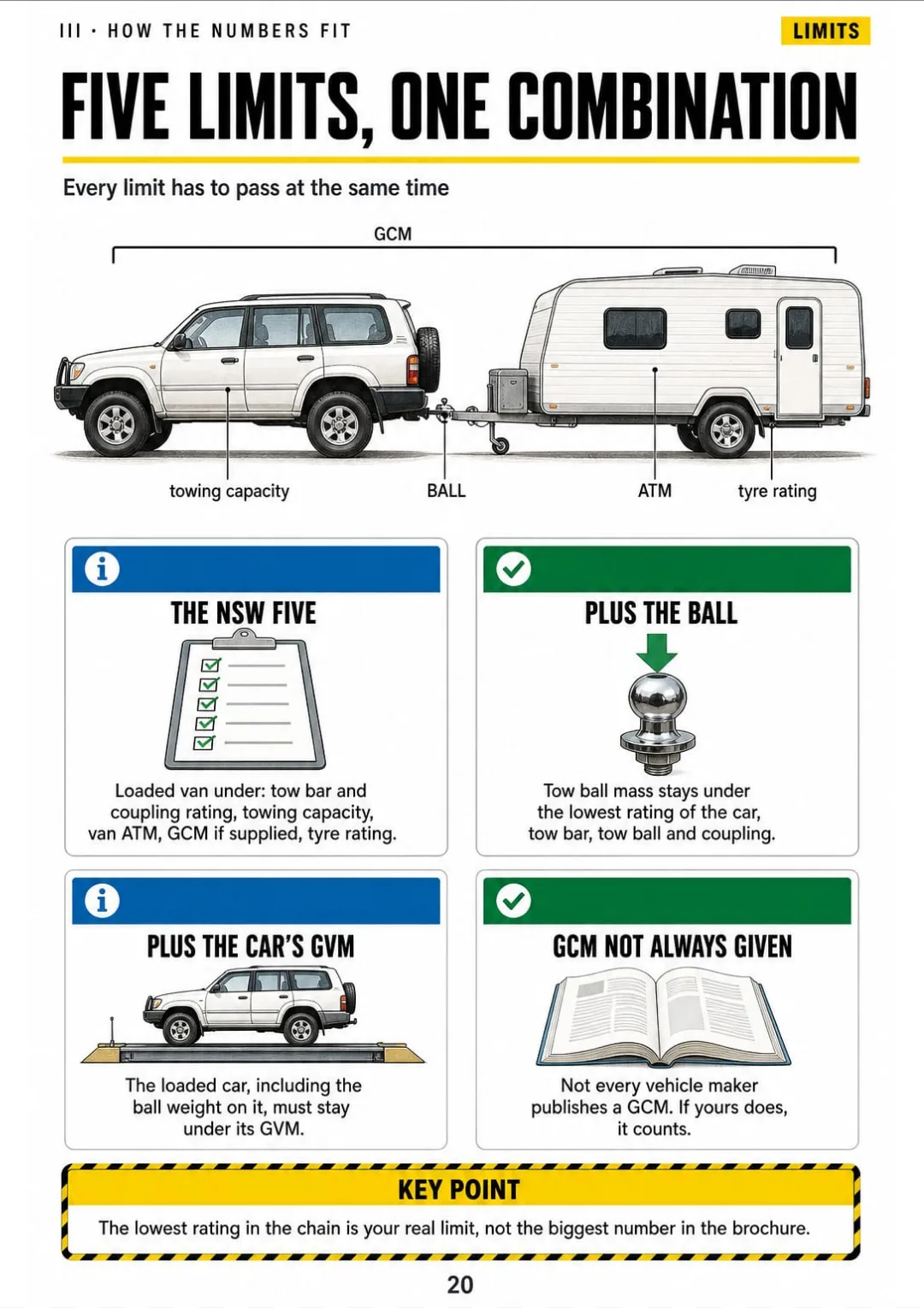
Five ratings plus ball and GVM: the lowest one is your limit
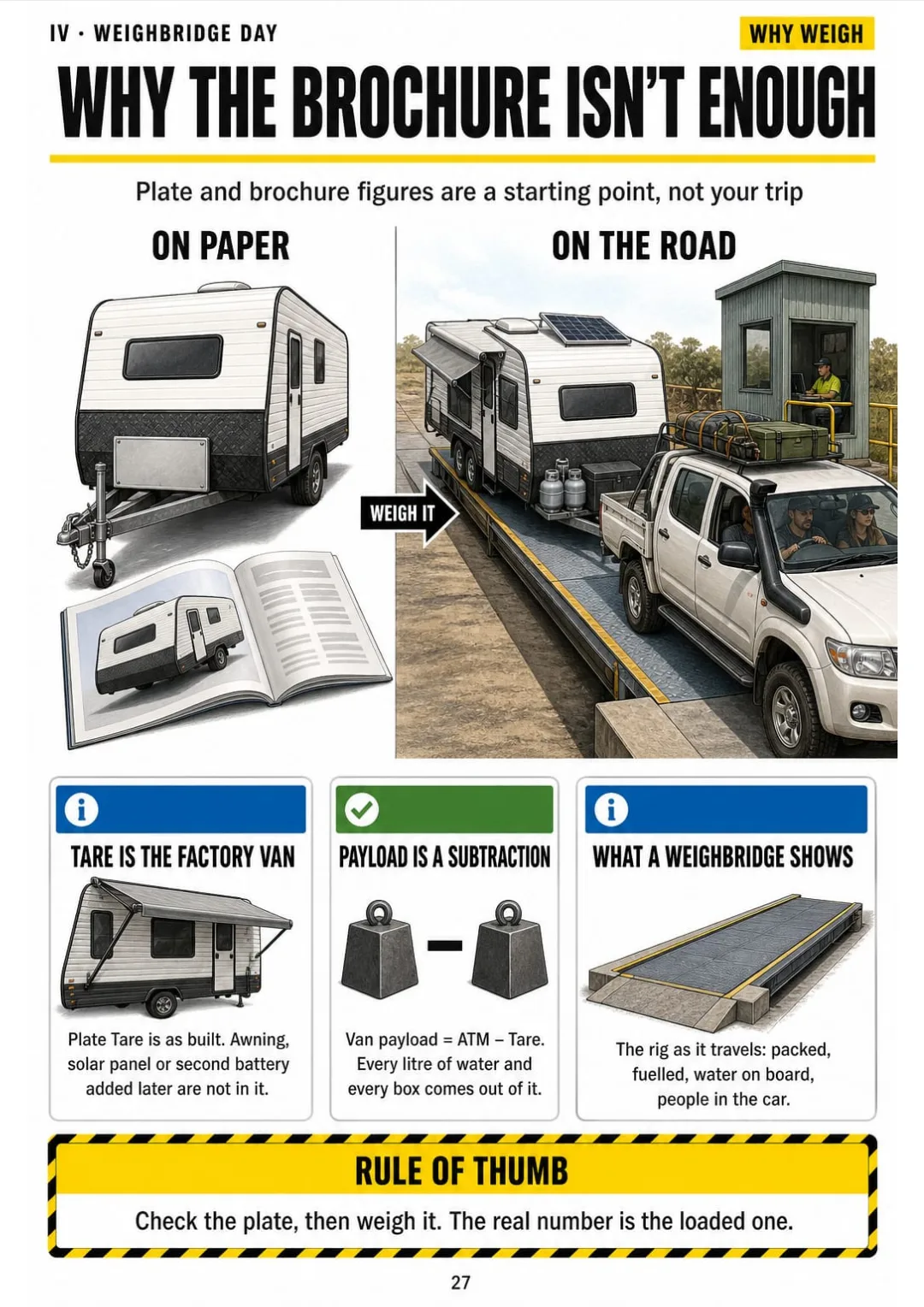
Plate Tare is the factory van: anything added later isn't in it, so weigh the real rig.
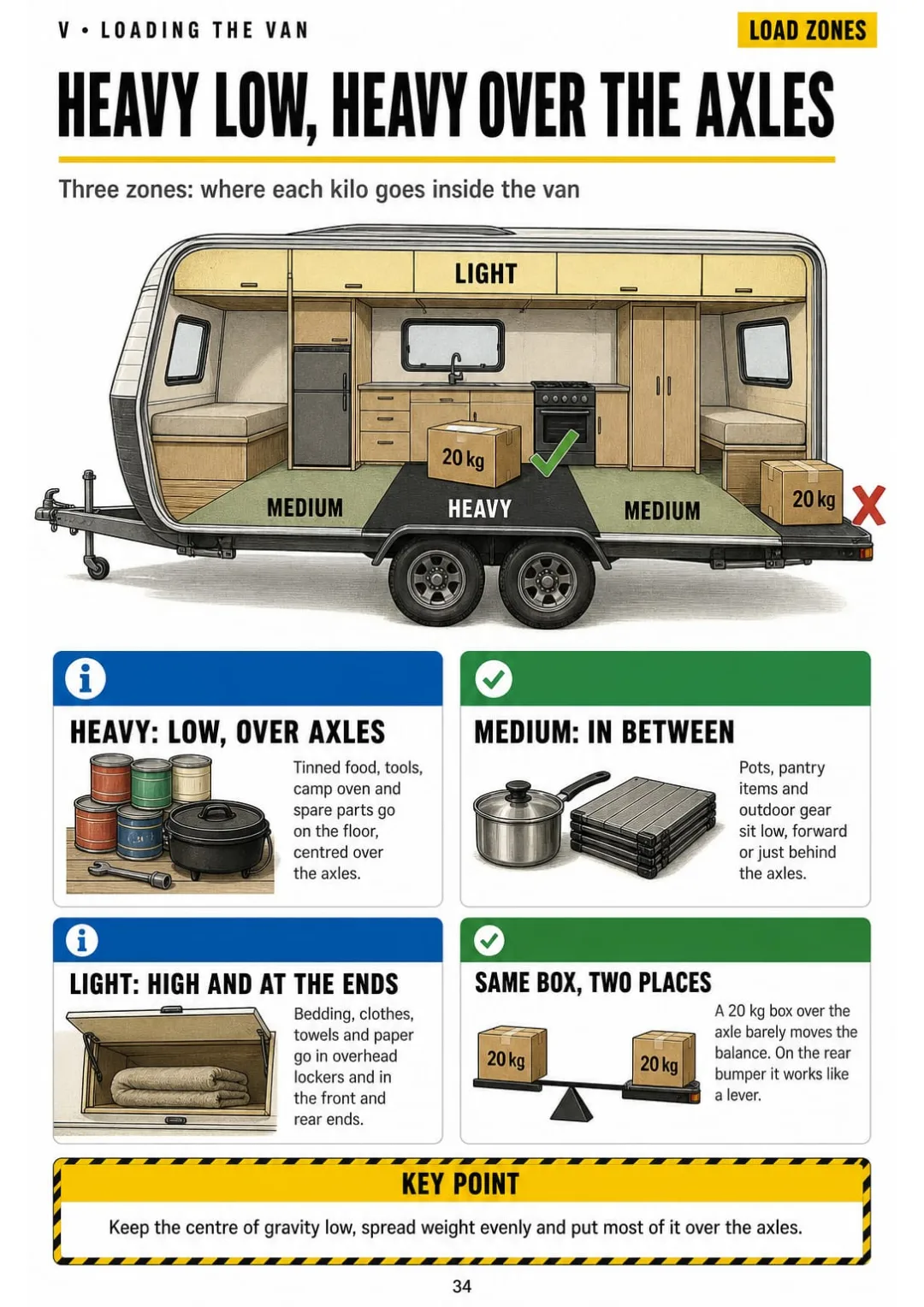
Heavy low and over the axles, medium in between, light high and at the ends.
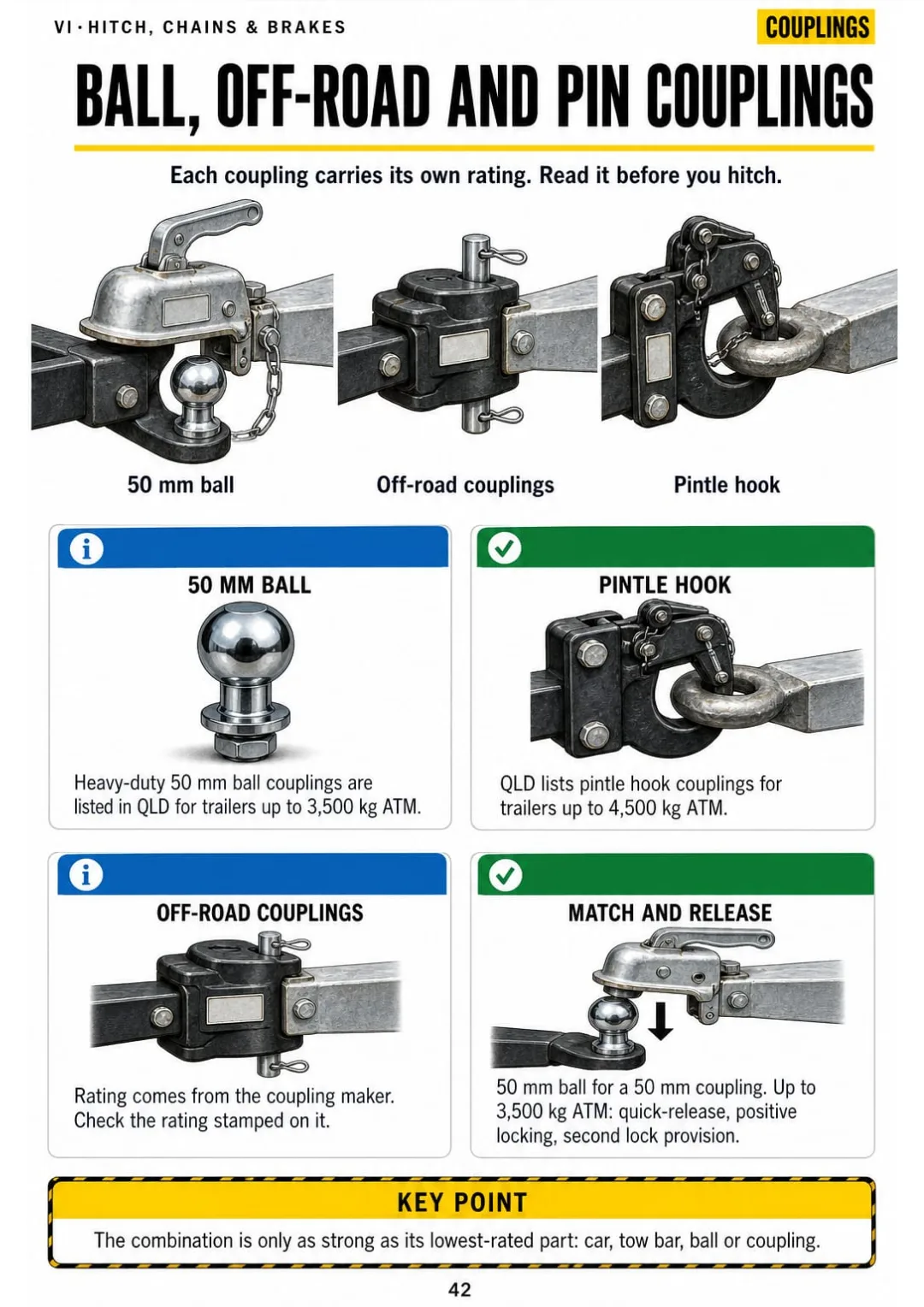
50 mm ball up to 3,500 kg ATM, pintle up to 4,500 kg: read the stamp.
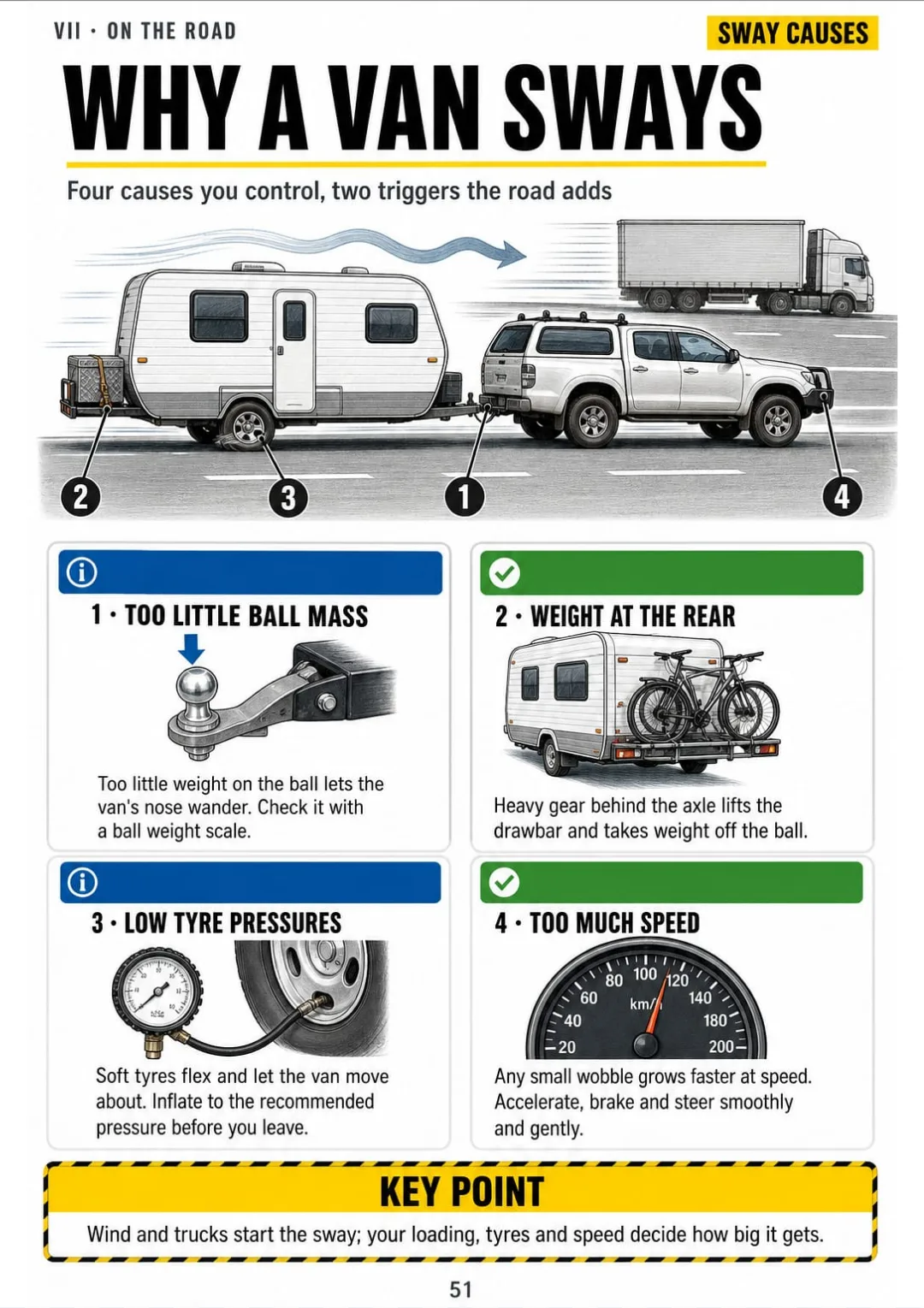
Four loading causes and two road triggers of caravan sway, on one drawing
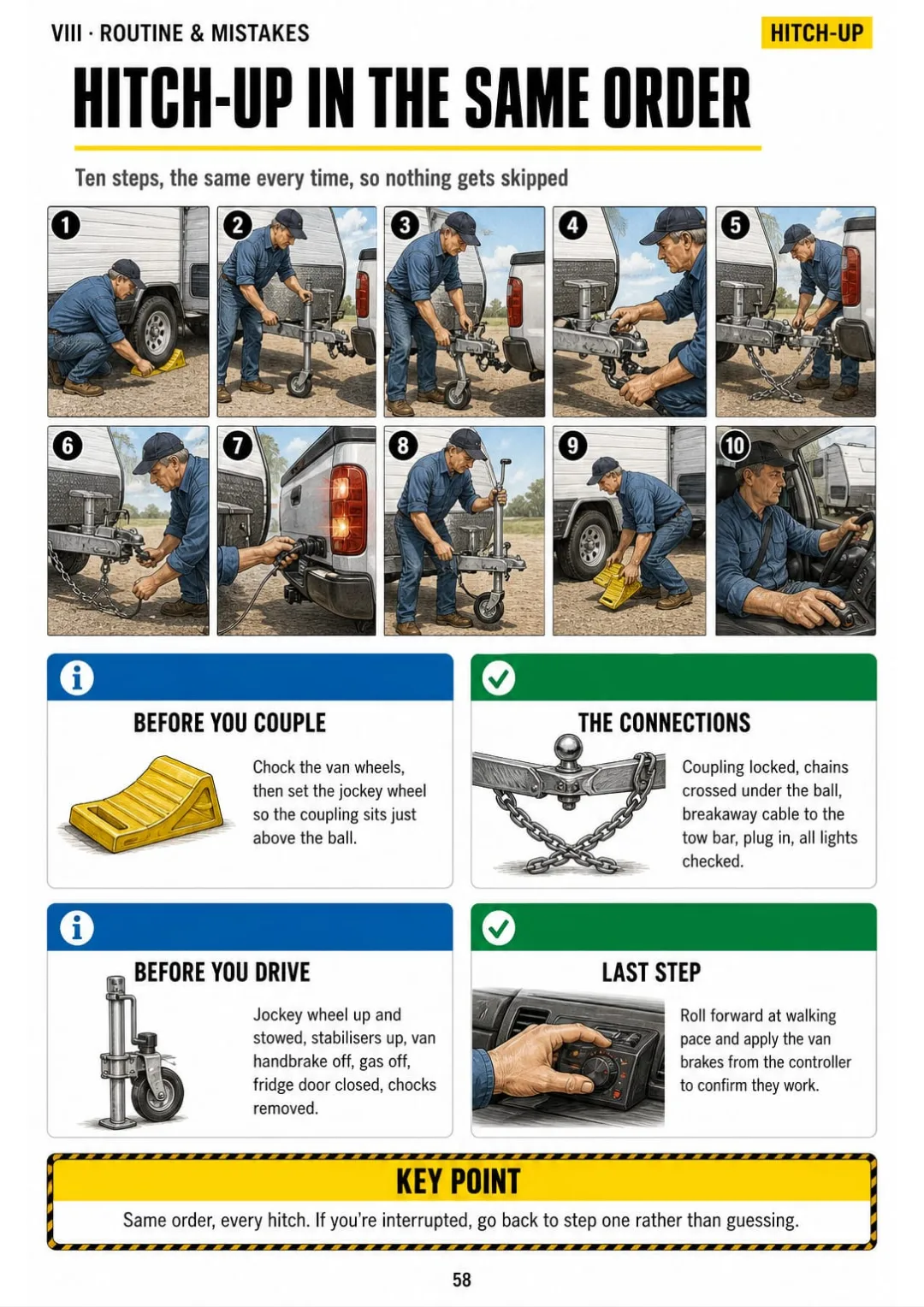
Chocks, coupling, crossed chains, breakaway, plug, lights, jockey wheel up, brake test: ten steps in order.

Swipe to see more →

These are real pages from the book. The table of contents is the full one: 8 parts and 60 topics.

The Problem Isn't You. It's How It Was Explained.

You're at the table with a photo of the van's plate, the ute's owner's manual and a weighbridge docket, trying to work out which limit you hit first.

ATM is on one page, GVM forty pages later, GCM in a footnote, ball mass in a forum thread. Each number is explained in paragraphs, never next to the others, so you can't see how they stack up.

Five ratings plus ball and GVM: the lowest one is your limit

In the book it's one page: car and van drawn side by side, the five limits labelled on them, and a box that says it plainly: the lowest one is your limit.

Same with Tare and payload, tow ball mass, the weighbridge steps and loading heavy low over the axles: each one has its own page.

So you put your own numbers next to the drawing, find the one that runs out first and sort the load before you leave, without going back to the manual.

COMPARE FOR YOURSELF

The Same Topic, Two Ways to Learn It

THIS
  • The manual: line after line
  • Weight ratings explained only in words
  • You hitch up still unsure
Kerb mass, as defined for the purposes of vehicle specification, refers to the mass of the unladen vehicle in its standard configuration with lubricants, coolant and a specified quantity of fuel, but excluding occupants, cargo and items of equipment fitted subsequent to manufacture or supplied as dealer options. Accordingly, aftermarket accessories including but not limited to bullbars, canopies, roof racks, auxiliary fuel tanks and drawer systems must be separately quantified and added to the published figure in order to determine the actual mass of the vehicle prior to loading.
FOR THIS
  • Kerb mass in one drawing
  • The numbers in a box
  • You see it and you get it
Kerb mass is the maker's figure: accessories like bullbars and canopies usually aren't included.
CONTENTS

Take a Look at the 8 Parts and 60 Topics

The numbers on your van, the tow vehicle side, how the numbers fit together, weighbridge day, loading the van, hitch, chains and brakes, steady towing and the routine: 64 pages, all illustrated.

IThe Numbers on Your Van · pp. 5-12
  1. Where to find your van's compliance plate
  2. Tare: the van before you put anything in it
  3. ATM: the most the loaded van may weigh
  4. GTM: the most the van's axles may carry
  5. Payload: ATM minus Tare
  6. Tow ball mass: the van's weight pushing down on the ball
  7. Axle and tyre ratings on the van
  8. The six acronyms on one page
IIThe Tow Vehicle Side · pp. 13-19
  1. Kerb mass: your car or ute before you add a thing
  2. GVM: the ceiling for the tow vehicle
  3. The tow vehicle's payload is smaller than you think
  4. Braked towing capacity and what it doesn't tell you
  5. GCM: car plus van together
  6. Rear axle load: the limit nobody checks
  7. Tow bar and tow ball ratings
IIIHow the Numbers Fit Together · pp. 20-26
  1. Five limits, one combination
  2. Worked example 1: the new van that's already near its ATM
  3. Worked example 2: a ute over GVM before it leaves
  4. Worked example 3: GCM is the one that runs out
  5. Where does the tow ball mass count?
  6. Ball weight as a percentage
  7. Fill in your own numbers
IVWeighbridge Day · pp. 27-33
  1. Why the brochure isn't enough
  2. Getting ready: load it as you travel
  3. Weighing 1: the whole rig on the bridge
  4. Weighing 2: the car only, van still hitched
  5. Weighing 3 and 4: the van on its own
  6. Weighing 5: the car unhitched, and the arithmetic
  7. Ball weight scale at home
VLoading the Van Right · pp. 34-41
  1. Heavy low, heavy over the axles
  2. The rear-end problem: bike racks and bumper boxes
  3. The front boot and the A-frame
  4. Water tanks move the numbers
  5. Left and right balance
  6. Tie it down: nothing loose
  7. Loading the ute or the car
  8. Before and after: the same van loaded two ways
VIHitch, Chains and Brakes · pp. 42-50
  1. Coupling types: ball, off-road and pin
  2. Ball height: towing level
  3. Safety chains: how many and how to fit them
  4. Van brakes by weight
  5. The breakaway system
  6. Electric brake controller: setting the gain
  7. Plugs and lights: 7-pin and 12-pin
  8. Weight distribution hitch: what it does and doesn't do
  9. Towing mirrors
VIIOn the Road: Steady Towing · pp. 51-57
  1. Why a van sways
  2. When a truck passes
  3. If the van starts to sway
  4. Tyre pressures for towing
  5. Braking distance and following distance
  6. Hills, gravel and corrugations
  7. State rules differ
VIIIThe Routine and the Usual Mistakes · pp. 58-64
  1. Hitch-up in the same order every time
  2. Unhitching without surprises
  3. The walk-around before each leg
  4. Checks after the first 50 km and at each stop
  5. Common mistakes with the numbers
  6. Common mistakes when loading and hitching
  7. Review: one page with everything

One Page, One Topic, All Clear

Think of it this way:

You've just rolled off the weighbridge with the docket in your hand and the van is heavier than you planned. You need to know where that weight sits and what to move first.

You open the loading page and see the van drawn side-on: heavy items low and over the axles, medium in between, light high and at the ends.

Heavy low and over the axles, medium in between, light high and at the ends.

Same with Tare and ATM, tow ball mass, the five weighings on the bridge, crossed safety chains and the brake controller gain: each one on its own page.

Caravan Towing & Weights Illustrated is 8 parts and 60 topics, all drawn, with three worked examples in kilograms, a page for your own numbers and a one-page review at the end.

What you see drawn, you don't have to memorize.

What's Inside Caravan Towing & Weights Illustrated:

Ipp. 5-12

The Numbers on Your Van

Where the compliance plate is, Tare, ATM, GTM, payload, tow ball mass, axle and tyre ratings, and the six acronyms on one page.

IIpp. 13-19

The Tow Vehicle Side

Kerb mass, GVM, the tow vehicle's real payload, braked towing capacity, GCM, rear axle load and tow bar and tow ball ratings.

IIIpp. 20-26

How the Numbers Fit Together

Five limits in one combination, three worked examples in kilograms, where ball mass counts, ball weight as a percentage and a page for your own numbers.

IVpp. 27-33

Weighbridge Day

Why the brochure isn't enough, loading it as you travel, the five weighings on the bridge and a ball weight scale at home.

Vpp. 34-41

Loading the Van Right

Heavy low and over the axles, bike racks and bumper boxes, the front boot, water tanks, left and right balance, tie-downs, the ute, and the same van loaded two ways.

VIpp. 42-50

Hitch, Chains and Brakes

Ball, off-road and pin couplings, ball height, safety chains, brakes by weight, the breakaway system, brake controller gain, 7-pin and 12-pin plugs, weight distribution hitches and towing mirrors.

VIIpp. 51-57

On the Road: Steady Towing

Why a van sways, passing trucks, what to do if it starts to sway, tyre pressures, braking distance, hills, gravel and corrugations, and how state rules differ.

VIIIpp. 58-64

The Routine and the Usual Mistakes

Hitch-up and unhitching in order, the walk-around, checks after the first 50 km, the most common mistakes and a one-page review.

At the end of the book: Three worked weight examples in kilograms, a page for your own numbers and a one-page review.
Plus: 2 Free Books

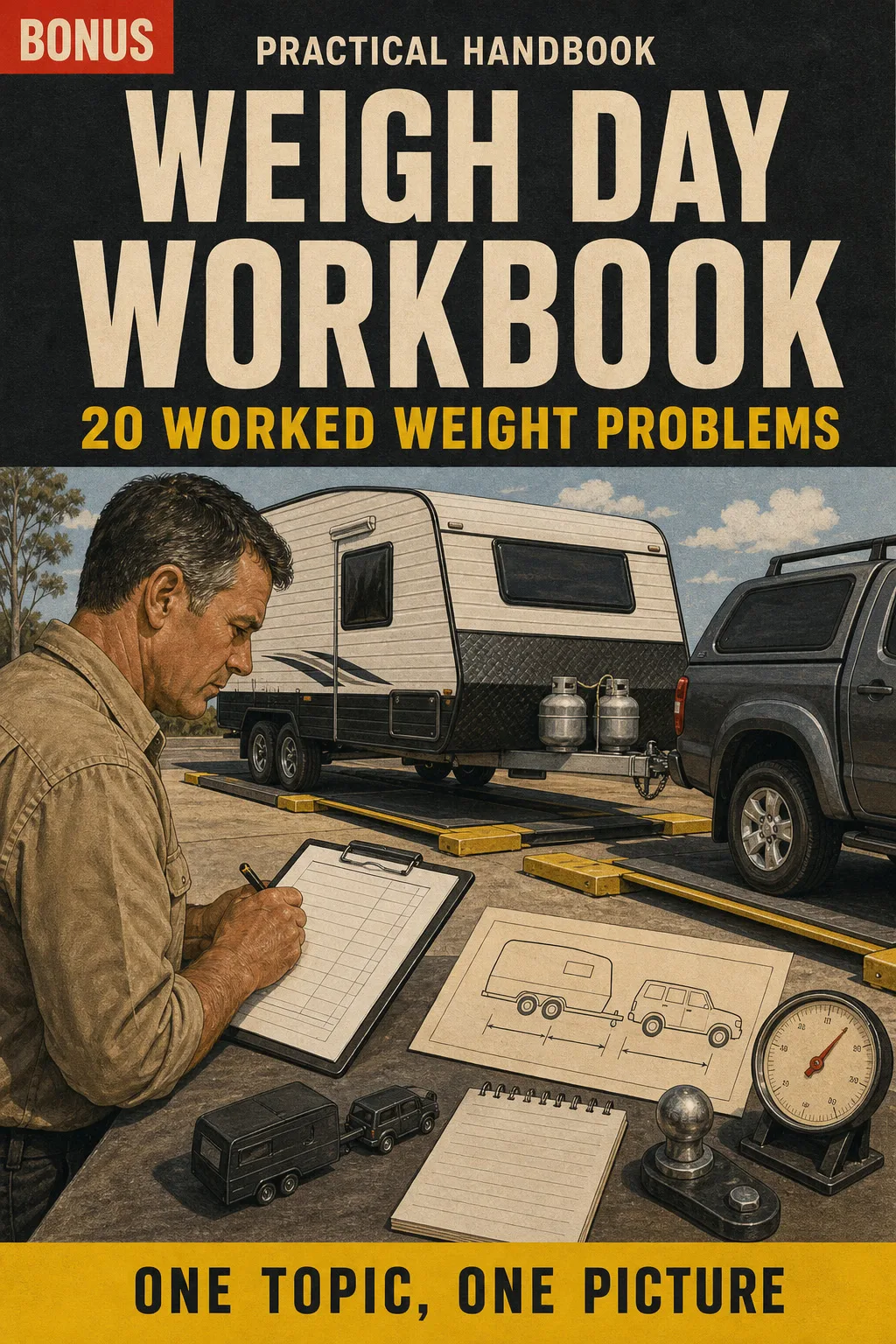
Weigh Day Workbook: 20 Worked Weight Problems

BONUS 1: «Weigh Day Workbook: 20 Worked Weight Problems»

Value on its own: US$ 17.90

Practise with realistic numbers: work out payload, tow ball share and combination mass from sample weigh sheets, with every answer drawn and explained step by step.

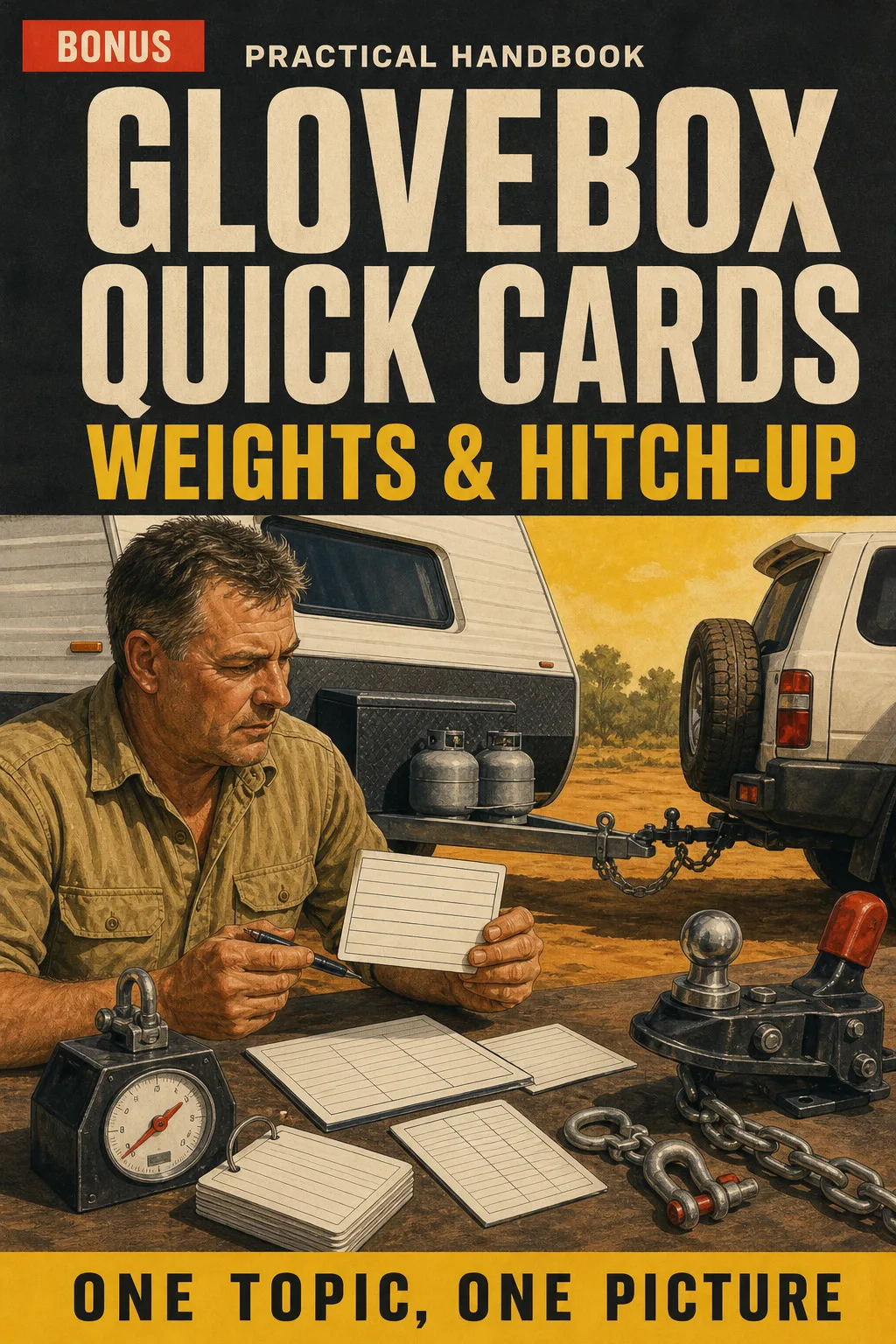
Glovebox Quick Cards: Weights & Hitch-Up

BONUS 2: «Glovebox Quick Cards: Weights & Hitch-Up»

Value on its own: US$ 14.90

The key definitions, the hitch-up order and the pre-trip checks on printable cards, so you have what matters at hand at the servo or the campground.

Caravan Towing & Weights Illustrated with 2 Free Books

  • Caravan Towing & Weights Illustrated: 64 illustrated pagesUS$ 63
  • BONUS 1: Weigh Day Workbook: 20 Worked Weight ProblemsUS$ 17.90
  • BONUS 2: Glovebox Quick Cards: Weights & Hitch-UpUS$ 14.90
  • High-resolution PDF to printIncluded
Total value US$ 95.80
YOUR PRICE:
US$ 27
You save US$ 68.80
YES, I WANT CARAVAN TOWING & WEIGHTS ILLUSTRATED FOR US$ 27

📄 This is a digital PDF book sent to your email: nothing is printed or shipped.

Secure purchaseEncrypted payment30-day guarantee

PDF by email: We email you Caravan Towing & Weights Illustrated as a PDF, together with the two free books. It's a single payment: no installments, no extra charges.

Who This Book Is For

You've just bought the van (or a heavier one)

You've just bought the van (or a heavier one)

You see what each number on the plate means and how it fits with your car or ute, before you load a single box.

The big lap is a few weeks away

The big lap is a few weeks away

You plan the weighbridge, the load and the hitch-up in a fixed order, and print the checks for the glovebox.

You've towed for years

You've towed for years

You check your own rig's numbers instead of a forum rule of thumb, and find which limit runs out first.

Everything You Get Today

US$ 95.80US$ 27
YES, I WANT CARAVAN TOWING & WEIGHTS ILLUSTRATED FOR US$ 27

📄 This is a digital PDF book sent to your email: nothing is printed or shipped.

30DAYS
GUARANTEE

30-Day Guarantee

Try Caravan Towing & Weights Illustrated for 30 days, bonus books included.

We refund everything if the file won't open, if the book isn't what you see here, if you were charged twice or if the email doesn't arrive. Just email us.

You pay once. No subscriptions.

Frequently Asked Questions

Is it for me if I've been towing for years?

Yes. It isn't a beginner's book: it shows how your plate, your car's figures and the weighbridge numbers fit together, in kilograms and with Australian terms.

Where does the content come from?

Each page is checked against the Australian Design Rules, the federal VSB 1 bulletin, AS 4177 for towing components and towing guidance from state road authorities. No text or tables are reproduced.

Is it official material?

No. It's an independent illustrated guide. Always check figures against your vehicle's manual, the manufacturer's plates and the current rules in your state.

Does it replace a towing course?

No. It helps you understand and check things in order; it doesn't replace a practical course, your vehicle's manual or a licensed auto electrician or mechanic.

Every state has its own rules. Will it confuse me more?

No. The weight ratings on your plates work the same Australia-wide, in kilograms. One page shows where state rules differ, so you know what to check with your own road authority and your vehicle's manual.

When and how does it arrive?

As a PDF by email, to the address you enter at checkout. The two bonus books come the same way.

Do I have to pay every month?

No. It's a one-off payment.

Can I have it on paper?

It comes as a PDF by email, not a printed book. You can print it at home or at a print shop; the quick cards are made to print and keep in the glovebox.

How does the refund work?

You have 30 days. We refund everything if the file won't open, if the book isn't what you see on this page, if you were charged twice or if the email doesn't arrive: just email us.

Before You Close This Page

No more rereading the plate without it sticking.

Tare, ATM and tow ball mass: you see them drawn and that's it.

You head off knowing where every number sits.

Drawings make studying faster.

The book is right below.

One-time payment: US$ 27 · Guarantee: 30 days · PDF by email

YES, I WANT CARAVAN TOWING & WEIGHTS ILLUSTRATED FOR US$ 27

📄 This is a digital PDF book sent to your email: nothing is printed or shipped.